

How To Mark Tools To Prevent Theft
By Will Mears
Tool theft. It happens on a daily footing, whether it'due south a battery pilfered by a laborer, a tool trailer stolen by opportunists or a household burglary in which the thief targets those expensive-looking Crimson or Yellow tools. Frequently, your onetime possessions are sold for pennies on the dollar while you lot are lucky to become a small insurance payout, minus depreciation, with piffling promise of always seeing your belongings again. Then let's talk almost protecting your power tools from theft.
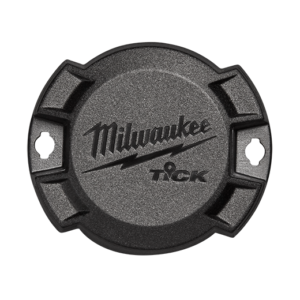 We can lock them up, monitor them with video surveillance, and even put trackers such as the Milwaukee Tick or DeWalt Tool Connect on them, but those measures do not guarantee that they are safe from theft, that yous will recover them before they are lost forever or even that the insurance policy that is supposed to cover them will pay out. Short of placing them in a vault with an armed guard, our tools are easy targets for anyone who either has ill-intent and/or recognizes the value of tools. Past all means, we should be proactive in protecting them, ensuring they are locked up when not in use and refraining ourselves from flaunting them when possible, but when we must become reactive (i.e. after a tool is stolen or misplaced) nosotros can have sure precautions to mitigate the chances of our loss being permanent. The about obvious ways of doing and so, which might prove of tremendous usefulness to investigators and insurance companies, is by documenting our ownership of said tools.
Most companies have a registration process, and some even incorporate tool trackers into their websites. These tin can be useful, but in my experience they are frequently time-consuming to consummate, especially when entering a lot of tools at once. Additionally, they require an internet connection and accept express ways of filtering for certain characteristics of tools. Suppose a toolbox total of drywall tools is stolen, which includes a screwgun, cutout tool, and batteries worth over $1000. Should we manually sort through dozens of tools on a website to find the information on those missing? Even if nosotros do, does the website we are working with provide space for boosted details, such equally which kit a particular tool was office of? One alternative to manufacturers' trackers, mayhap meliorate considered as a complimentary tracker, is using a spreadsheet format that can be easily emailed (in instance a calculator is stolen) and which does not rely on a fast internet connection.
 A number of months ago, I created an Excel workbook, with separate worksheets tabbed by color (xanthous for DeWalt, scarlet for Milwaukee, orangish for Ridgid, etc), and with columns containing the obvious information such every bit model and series number as well as boosted data including place of purchase, retail price, cost paid, and comments. I tin hands filter and/or sort the tools by model number or voltage if needed, and may even try to add links to images of the receipts at some point. This does not in itself prove my buying, just having the serial numbers besides equally defining characteristics (dent on left rear, torn rubber on handle) can ease the jobs of those tasked with locating the tools, or at to the lowest degree the thieves, and making sure that our insurance policies aren't merely money ill-spent. Anyone with access to Excel, Google Docs, or some other service that provides spreadsheets can make a serviceable tracker that can be customized to their particular needs.
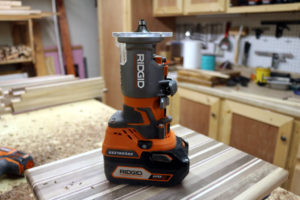 Some other way of documenting our tools is through photography and peculiarly video. If we have pictures of our tools in an area that is easily identifiable as belonging to united states (e.one thousand. a living room with defining characteristics) along with close-ups of the serial numbers, it is difficult to argue that we are exaggerating our losses. In a similar fashion, albeit arguably more effective, taking a video of the aforementioned—detailed shots of our tools and serial numbers in our ain homes or workshops—along with a brief introduction and possibly minor narration, volition go a long way towards easing our pain when establishing ownership of a tool. If you lot really want to get wild, save the receipts and take photos or video of the receipt and tool together. It is a safe bet to take photos of the receipts anyway, and so why not simply add the tool itself to the shot?
Some tool-related items practice non accept serial numbers, such as batteries and some chargers. Oftentimes, however, manufacturers volition at least have some distinguishing marks on these items, such every bit manufacture codes. In such cases, documentation of these codes, along with a detailed clarification of other defining characteristics, could aide in the recovery of these items or at to the lowest degree the prosecution of the person who took them. I volition not pretend to know how hectic a larger jobsite can go, but it is easy to imagine lower-salaried employees trying to pocket a $100 battery when they can. If you know what the missing battery looks like, and that employee is foolish enough to endeavour to pass it off as his own a few days later, it is piece of cake to see how such a detailed description can help.
What about mitt tools and other non-serial numbered items? Given a rotary or etching tool, an private or company can easily mark these along with the aforementioned ability tools and accessories. When I was a mechanic, I marked all of my tools, from the most expensive Snap-On down to the most inexpensive Benchtop (M-Mart's offerings prior to their merger with Sears) with a simple word: Will. I was always the but Will at the places I worked and my etching, like my handwriting, was distinctive enough for me to recognize. This helped me quite a bit after I left the trade, equally my tools were borrowed past relatives and inevitably ended upward in their toolboxes. Giving expensive tools such a personalized impact reduces their resale value, but if you are seeking to protect them from resale (by a thief) in the beginning place, is this a bad thing? Put yourself in the shoes of a thief: would you rather take tools with the owner'due south proper noun conspicuously marked on them, or tools that have nothing likewise light wear and tear? I'd readily accept the latter, possibly passing up the other tools for fear of existence caught.

I've written a few suggestions on how to document your tools, just what of insurance? I'm no insurance expert, so ensure that you confirm your coverage and rights with your insurer and/or lawyer, just if yous take a homeowner'due south policy you should have some sort of personal property coverage. If then, yous will possibly non need additional insurance solely for your tools, unless those tools and your other possessions are worth more than than your policy covers. If yous are a business possessor, do your research besides to find out the all-time pick to insure your tools, especially since they can incorporate a substantial portion of your assets.
Coming full circle, what nearly those more than overt security practices? Similar many others, I am guilty of having distinctive and mobile tool boxes that tin can make it easy for a dishonest person to salve me of thousands of dollars' worth of tools in a matter of seconds. Every bit such, I employ a variety of methods to disguise and secure my ToughSystem and Ridgid boxes, from cover-up (placing them in my backseat with the DeWalt logo hidden from view or throwing a battered tarp and scrap forest or garbage over them in my truck bed) to individually locking them and using cable locks to secure them to an immobile object. A well-placed Tick or Tool Connect tracker, if undetected by the thief and in range of a device with the applicable app, can assist locate a recently liberated toolbox likewise, though in my stance such devices are too limited in range and expensive at the moment for the boilerplate tool owner to attach to every tool. Removing tools from a piece of work van at night or backing a trailer so as to prevent access to the doors tin can also exist a deterrent, and in extreme cases, even decoy tools might help to save more expensive options—for case, leaving generic and inexpensive tools out or lightly secured while storing more valuable tools in less obvious places. If I worked in areas with known criminal activeness, I'd strongly consider buying less expensive tools besides, reserving my expensive DeWalt and Milwaukee versions for jobs in lower crime areas while making do with lesser valued brands while in those areas. I'd do the same if I ran a business where I provided loaner tools to employees or temporary assist, keeping my premium tools in the hands of only myself and maybe 1 or two trusted long-term employees. This could exist considered overcautious, but denial, deception and disinformation accept worked well for military operations for millennia, so why non utilize a few of these tactics when it comes to protecting our investments?
Whatever y'all do, don't just have for granted that your tools are safe. If yous accept a popular brand, you can be sure that someone is willing to adopt information technology when yous aren't looking. The more expensive and the less secured they are, the greater the chances that you'll wake upwardly one day to find your prized tools—in some cases the very ones you rely on to feed your family unit—gone. If you are unable to provide serial numbers, other identifying information, and photographic or video proof of ownership, your insurance company may be unwilling to accept that a single burglary resulted in a loss of tens of thousands of dollars of tools, or at least depreciate those tools far below their actual value, while the police force can do trivial likewise file the report and hope for some sort of evidence to identify the thief.
I took my tools and privacy for granted once. I won't again.
Source: https://toolsinaction.com/power-tool-information/protecting-power-tools-theft-securing-tools/
0 Response to "How To Mark Tools To Prevent Theft"
Post a Comment